Wednesday, 25 July 2012

The Tower of London

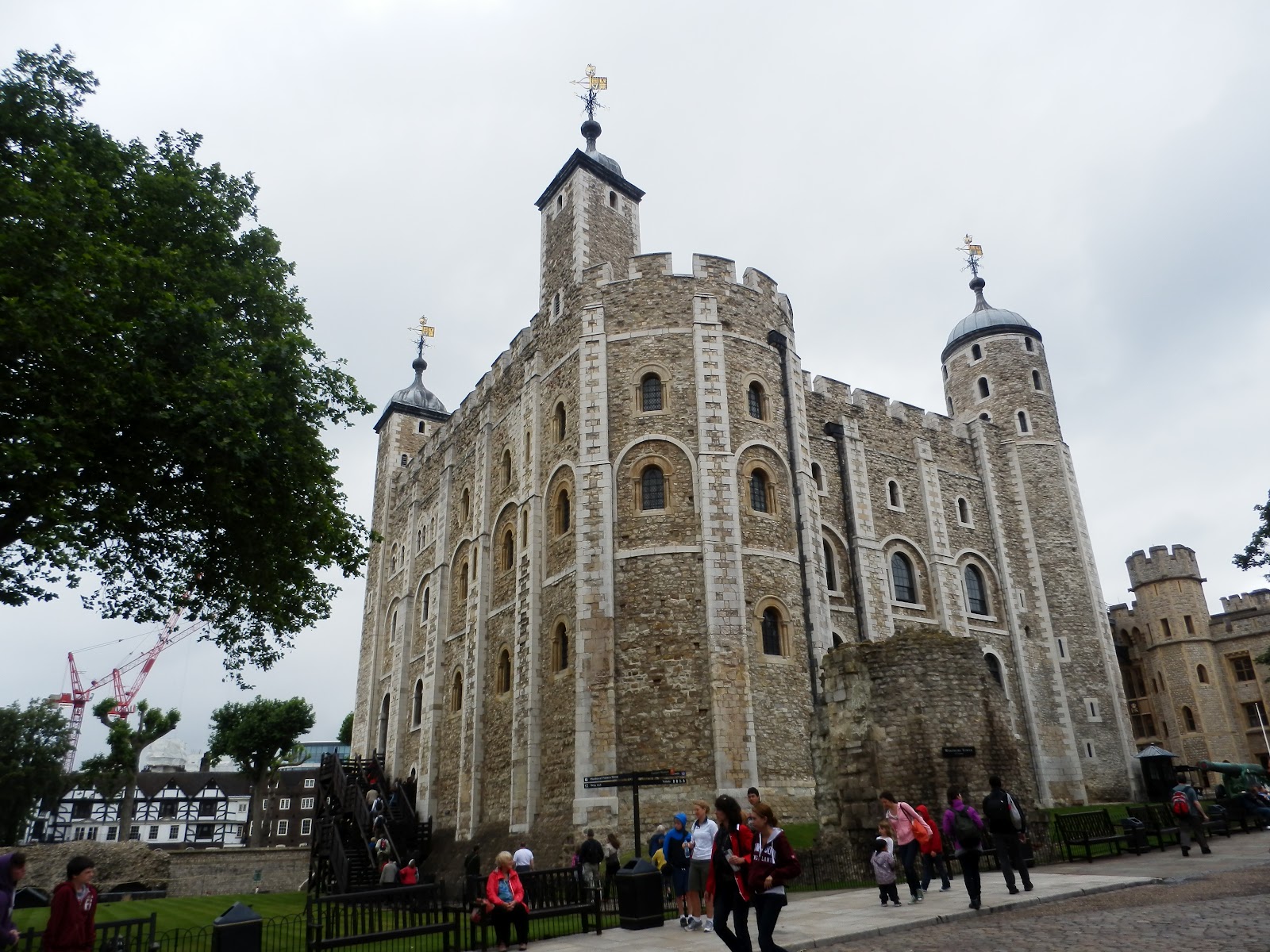
One of the things we love about London is the long and interesting history that the city has. We’ve been to a few castles and palaces now, and they all have an interesting story to tell. The more places we visit, the clearer it becomes to put the historic jigsaw together. Another piece to the puzzle is a place we’ve talked about visiting for some time, the Tower of London. 

Our travels through the UK don’t always involve drinking and cocktails. We are always interested in learning about the vast history that Britain has to offer, and the Tower of London is certainly a major part of it’s history. The Tower dates back to 1066, after victory at the battle of Hastings. William the Conqueror completed the construction of the tower in 1078. It served many purposes aside from being the royal residence for such Kings as King Richard, Henry III and Edward I. It was also used as a prison for intruders who were caught trying to infiltrate the towers walls.  The main section of the palace is the “White Tower”.  It is the strongest structure of the castle. It was built with such precision, so much so that the main centre stairwell had the ability to be easily discarded in case of an attack.  By the end of the 11th Century the Tower was described as being the most advanced fortress in Europe.

As I often do, I can’t resist picking up a souvenir for the day’s trip. This time I picked up a bottle of the “Tower of London’s, Kings Table Real Ale”. With Britain being such huge ale drinkers, I thought this would be an appropriate memento of the day.  This traditional English Ale has been brewed by hand. It’s golden in colour, As well as being light in hops, which make it’s flavour not to overpowering and easy to drink.  Most ale’s tend to be heavy and I personally have found them hard to drink. This however was different. It was heavier than a normal lager, but it was just as refreshing.  I realize that this Ale is meant to be served at room temperature, but it’s against everything I stand for as an Australian, so I couldn’t help but pop it in the fridge just to chill it down.  

So another tourist attraction is ticked off the list. Who knows what we’ll see and learn about next. 


Monday, 23 July 2012

History of the Brasserie & Cafe


After returning from Italy, we had only a couple of days before we were expecting a visitor from Australia. One of my close friends was making the trip to London, and we were both travelling south to France to experience one of the greatest sporting events and by far the most prestigious bike race in the world, the Tour De France. Cara and I were lucky enough to see the last stage of the tour last year, so Cara decided to sit this trip out whilst myself and my mate Evan would follow a number of stages in the race towards Paris.

Our journey began in the city of Toulouse. A city, which is famous for it’s pink coloured buildings, giving it the nickname “The Pink City”. It is also the gateway to the Pyrenees, which is famous for it’s grueling climbs in the Tour every year. Even though, we had a jam-packed week ahead following the bikes, we were lucky enough to still have the time to explore Toulouse and see what this little city had to offer.

As we got out of our hotel and into the sun and warmth of southern France, we made our way into the city centre. As we walked the streets, I noticed the endless number of café’s and brasseries. This got me thinking about why the French love the café or brasserie style bar.

My research began by looking at the term “Brasserie”. It is the French word for brewery. The story goes, that brasserie’s first began in the north of France, where the French border joins Belgium. Small microbreweries opened in an attempt to compete with the high demand for Belgium beer. After some time of brasserie’s only selling beer, owners began to offer food and other light snacks to their patrons. Over time, brasseries are now no longer associated with beer and breweries, but smaller restaurants, that are usually relaxed, with still an upscale setting. This setting, I’m sure, sounds much like a café. The two are both very similar. The word ‘café’ comes from the word ‘kaff’, which in French means, “drink”. So as the brasserie began in France mainly serving beer, the café was a place for people to have other drinks, the most common is of course coffee. When both styles of bars began serving light meals, they both became almost the same thing. As we walked around the streets of Toulouse, I noticed that the Brasserie style is often set up to look more like a restaurant. It’s designed to almost be a middleman between the café and the restaurant. For tourists, this can all get a little confusing because, in countries like France and Italy, a café is also another term for cocktail bar.

So what is the conclusion to this research I hear you ask… well the short answer is, they are all much the same. In France, brasseries, cafes and bars, despite starting off as three completely different types of licensed establishments; are now blending together all offering a similar service. The bar industry is now very competitive and Toulouse is no different to any other city. Owners now cannot afford to limit themselves (and there patrons) by sticking to one style of venue, as was the way many years ago.

Being a warm evening, we picked out a nice outdoor Brasserie to relax and eat over a few glasses of wine and prepare ourselves for a busy week ahead following the tour.

Scenes from the Tour De France


Scenes from the Tour De France

The Amazing French Alps

Friday, 13 July 2012

Back to Italy

Well it’s summer again in Europe, and Cara and I have been looking forward to getting out of the cold, wet weather that we’ve been experiencing in London and go back to one of our favourite countries in Europe for some sunshine and amazing food... Thats right, we were returning to Italy. Our first trip to Italy was very special. We travelled to Rome and had an amazing few days. This time round we made a trip to one of Europes fashion capitals, Milan.  Being a city of style and fashion, it was fair to assume that their bar and cocktail culture would follow the same trend. So we were both excited to explore another new city, try some new cocktails and of course eat the amazing Italian food.


By far the main attraction in Milan is the “Duomo di Milano”, which translates to the Cathedral of Milan. This gothic and impressive structure began construction in 1386. It was finally complete in 1965. Looking at the fine detail in the cathedrals exterior, we could understand why it took them so long to complete. It is the forth-largest cathedral in Europe, and it’s the largest in Italy. So Cara and I decided to find a perfect spot to have some of our much-loved antipasti and take in the grandeur of the Duomo, before continuing our exploration of Milan.

A trip to Milan is not complete without experiencing the cities high-end fashion scene. As we walked the streets, passing all the big name featured stores; we decided to make another stop. This time at Dolce & Gabbana, and more importantly the D&G Martini bar. This fashion icon is the brain child of 2 Italian fashion designers, Domenico Dolce and Stefano Gabbana. They came together in 1982 to launch one of the most sort after brands in Italy and the world. The D&G Martini bar has been designed to convey the same ideals of the high-end fashion label, which has made the brand so successful today. It’s relaxing, intimate and glamorous setting, gives shoppers the perfect place to unwind after a ‘hard’ days shopping. I wanted to order a cocktail from their menu that screamed “Italy”. I chose a cocktail called “Milano”. Not the most original name in the world, but one that was fitting. It was a martini that consisted of equal parts Campari (another great Italian spirit), Gin and Aperol. It was garnished with slice of orange, which was coated in saffron. This cocktail was exactly what I expected. Crisp clean, with a (what I like to call) razor sharp finish. It is certainly not a cocktail for everyone. Campari can be a tough spirit to drink. But as I looked around the room, I couldn’t help but notice that most of the other patrons were drinking the famous fiery red spirit. Only in Italy would you find so many people drinking Campari at the same time. Aside from the Campari, the gin and the Aperol added to its dry crispness. The Aperol gave the cocktail a refreshing apricot after taste. The garnish was a nice touch too. A saffron coated orange slice was something original. It gave the drink an acidity, which complemented the spirits nicely.

As we sat and enjoyed our drinks, we noticed every customer that walked into D&G’s Martini bar all came carrying a number of shopping bags from the various well known fashion label stores in the nearby area. Being typical Aussies, dressed in flip-flops and me in my Australian soccer top, we suddenly felt a little out of place. Not to worry though, the day was young and we still had lots to see in Milan.


D&G’s “Martini Bar”
The Milano:
In the cocktail shaker
30ml Campari
30ml Gin
30ml Aperol
Stir and strain into a Martini Glass
Garnish with a slice of Orange coated
in Saffron.

Wednesday, 4 July 2012

Imbibe London Bar Show 2012

Nothing brings out the countries best bartenders like a trade show. It’s a chance to research, learn and (the best part) try new products on the market. It’s also a great opportunity to meet with other industry experts and discuss all things drinking.

I’ve attended several trade shows in Australia, but this was on such a larger scale. There were many new products on display and I’d love to share my thoughts on all of them, but it would take me forever. I can however pick out a couple of products which have stood in my mind.

New flavoured vodkas seemed to be a popular trend this year. One which caught my eye was Belvedere Vodka’s new “Bloody Mary” flavoured spirit. This addition to the belvedere brand contains seven vital ingredients which makes the bloody mary cocktail such a popular drink today. It is a maceration of black pepper, horse-raddish, bell peppers, chilli, vinegar, lemon and (of course) tomatos. It also contains hints of other herbs and spices, such as celery. When I tasted this spirit straight, I could really pick up the smokey flavours of the black pepper instantly. The taste of the chilli’s was apparent too, but it didn’t make the vodka spicy. It was a nice spirit and I could see the potential of this flavour for home bartenders. It had strong bloody mary flavours, but not over powering. It is a spirit that has not been designed to replace the original cocktail flavours (like so many flavoured spirits try to do), it simply would compliment the ingredients which you’d use to make the classic drink.

Now something for the sweet tooth... Thunder Toffee flavoured vodka. Thunder toffee vodka is a triple distilled premium vodka, free of additives and preservatives. During the distillation process,  fresh toffee is melted down and added to give the vodka a smooth sweet taste. Thunder has been designed to be drunk as a shot or straight on ice. Although cocktails have been created with this spirit, it’s sweet and over-powering flavour can make it hard to use in drinks.  Thunder toffee has become a huge success amongst ski resorts mainly in France. I found it nice, but you could not have more than one or two. It is very sweet. In my opinion it must be served ice cold. Room temperature in good, but ice cold gives the spirit a clean and crisp taste.

As I walked around the Imbibe show, I came across several products which I’ve tried in the past. I can’t resist sampling them again. Some of my old favourites such as Ron Zacapa Rum and Courvoisier Cognac are always popular among us bartenders. I was also impressed with the wine component of the show. Wine often takes a back seat to the spirits and liqueurs, so it was good to see some of the top wineries from around Europe getting involved in a big way. I had the pleasure of visiting the French wine stand which had over 100 of the finest French wines on display for us to try.

By the end of the day, we were all a little tipsy. Trade show’s are always a lot of fun. I was able to learn a lot, try many new products and mingle with the UK’s industry experts.

Sunday, 24 June 2012

The Championships: Wimbledon 2012

When we arrived in London over a year ago, one of the top priorities was to go to the All England Lawn Tennis Club for The Championships at Wimbledon. For some strange reason, I never wrote about our day. Cara and I had a great day a year ago, however in true Wimbledon style, we en-counted wind and rain. So when the tournament rolled around again, I decided to return to the All England Club  to capture what makes The Championships so special.

I don’t need to give many people a history lesson on the event, as it is widely considered to be the most famous and most prestigious of tennis tournaments in the world. It was first played in 1877, and it’s one of the few tournaments still to played on grass. Back in 1877, the event had a mens singles field of 22 players and the mens final was watched by around 200 spectators who only paid one shilling each to attend. Today, Wimbledon is now a massive money maker, both on and off the court. For the 256 players who play in the singles draws today, prize money is larger than ever, sponsorship is forever increasing and therefore crowd attendance is constantly growing every year. Due to ever growing popularity of Wimbledon, comes the demand for more food and drink at the Championships.

Arguably the most popular purchase by spectators is the famous Wimbledon strawberries and cream. Fans flock from around the world to experience the Tennis at Wimbledon and strawberries and cream is usually a huge part of their day. Along with this popular snack, champagne and Pimms also have a fair showing. But aside from these standard features at Wimbledon, nearby bars and pubs are now stamping their own name on the Wimbledon festivities. Thanks to the “Drinks Business” web site, I was able to find two new tennis themed cocktails which would be popular at this years event.

One of the cocktails is a Cucumber & Strawberry Mojito Royale.
This Mojito variation consists of:

Build in a tall glass:
45ml Hendricks gin
3 Cucumber slices
2 - 3 Strawberries
A Handful of Mint
15ml Sugar Syrup
15ml Lime Juice
Add Crushed Ice
Topped up with champagne.


The other cocktail featured over the 2 weeks of the Championships is the "SW19 Cocktail”.

In a shaker:
30ml Gin
30ml Mandarine Liqueur
15ml Elderflower Cordial
15ml Lemon Juice
10ml Home made Cucumber Puree
10ml Home made Celery Puree
Shaken and double strained into a short glass over a
frozen lime cordial flavoured ice


A day at Wimbledon is truly an unforgettable experience, and I’ve been lucky to doing have now done it twice. I’m sure the prestige will continue to grow, as i’m sure will the tournaments tennis themed drinks.

Wednesday, 16 May 2012

My Birthday @ Milk & Honey

Well... It’s my birthday, and Cara being the amazing woman that she is, has organised a gathering of our friends in a cocktail bar which I’ve been dying to go to since we arrived in London. “Milk & Honey” is an exclusive members only bar located in Soho. This bar is well known all over the world for it’s high level of service and of course amazing drinks. I’d heard of “Milk & Honey” back in Australia some time ago, so my expectations of this bar was high.  So exclusive is “Milk & Honey”, the entrance is a challenge to find in itself. Hidden behind a single unmarked door, we were half expecting to have to give the hostess a secret password to enter.  

The bar opened in April 2002. It is the sister bar to the original “Milk and Honey” based in New York. Its design is cozy and intimate. Dim lighting with several booths, which make you feel like you’re the only people in the bar. Another feature worth mentioning are the house rules. Rules that were written to be a little “tongue-in-cheek”, but you can’t help but take them semi seriously. Rules such as “All gentlemen must remove their hats” seems reasonable, but then rules like “Gentlemen must not introduce themselves to ladies. You must get the bartender to introduce you” seems a little far-fetched, not to mention hard to enforce. 

So once you’ve found the secret door, gotten a table and understood the house rules, It’s time to check out the menu.  The cocktail menu was designed by cocktail guru and a bar legend in the business, Dale DeGroff.  It’s a simple menu, with a good mix of classics, variations on some classics and unique drinks to “Milk & Honey”.  They also offer quite a good selection of wines, with many French champagnes, followed by a selection of red and white wines from all over the world. 

My first order for the night was an “Aviation No. 1”. This consisted of Calvados (apple brandy), Cassis (black-current liqueur), Absinthe and Lime juice. It’s not a drink for everyone, the Absinthe cuts through the other flavours, but it doesn’t over power them. It’s a complex drink which is refreshing, but still needs to be drunk slowly.  Take out the Absinthe and this drink would be far more appealing to the masses, but then it would be boring and lack flavour.  I loved it. Absinthe is a hard spirit to work with, but this cocktail was balanced perfectly. 

Our second drink for the night was the under-rated classic, a drink called the “Last Word”. It’s a mixture of Gin, Maraschino liqueur, Chartreuse and Lime juice. I chose this drink for similar reason as the “Aviation No 1”. Like Absinthe, Chartreuse is a hard spirit to work with and it’s interesting to see how a bartender can balance this strong flavour amongst the other ingredients. Once again it was served to perfection. This is another cocktail that is not for everyone, but even if you don’t like Chartreuse, you can appreciate how well the bartender has mixed this classic. 

When we left “Milk & Honey” we were all very impressed with the experience. The staff were not pretentious (which is not common in exclusive member only bars), the drinks were fantastic and we all celebrated my birthday in style. Hopefully we’ll return to “Milk & Honey” soon. 


Milk & Honey's
“Aviation No. 1”
Shaken and Strained into a Cocktail glass
- 30ml Calvados (Apple Brandy)
- 30ml Creme de Cassis (Black-current Liqueur)
- 10ml Absinthe
- 30ml Lime Juice


Milk & Honey’s
“The Last Word”
Shaken and Strained into a Cocktail Glass
- 30ml Gin
- 15ml Maraschino Liqueur
- 15ml Chartreuse
- 30ml Lime Juice

Wednesday, 25 April 2012

LAB Bar & The Soho District

Cara and I have now been living in London for close to a year. In that time we have seen some amazing things and have been to some awesome bars. One of our frequent watering holes is a cocktail bar in London’s west end called “LAB Bar”. LAB stands for the ‘London Academy of Bartending’. It was a bar designed to teach and hone the skills of bartenders who have a love and passion for bar work. This is why we love this place so much, it’s full of people who love good cocktails, just like us.

LAB Bar is located in Londons Soho district, a part of the nations capital which is famous for being the home to top bars, restaurants and entertainment. The Soho district is also known for it’s “non prejudice” attitude. A place in London where no one will judge you on your fashion, race, age, sexuality, etc.  Aside from LAB bar, there is a smorgasbord of cocktail bars to choose from in the area. All appealing to different demographics in Soho.

Soho has had a long and turbulent past. It’s reputation for being the home of sex and drugs is slowly changing into being the place for fashion and entertainment. Although the stigma is a hard one to shake. Having said that, bars and restaurants have no trouble filling their premises with party goers. On weekends, the local council closes off the streets to accommodate the thousands of people who flock to Soho every weekend.

LAB Bar is considered one of the best bars in Soho. It was founded in 1996 and was designed as a training school for passionate bartenders. At LAB, cocktails are not just drinks. They are works of art. The staff pride them self on presentation. Some of the garnishes used on these drinks are beyond comprehension. The fine knife work shown by the bartenders would give a michelin star chef a run for their money.  Once you get past the amazing garnishes, the cocktails themselves are perfectly balanced. The combination of flavours used in these drinks are well thought through not to mention unique.

Some of our favourite concoctions are the “Red Hot Chilli Pepper”, “Slap & Tickle”, “Rapaska” plus many more. Truth be known, you are hard pressed to find something on the menu that doesn’t sound amazing. The menu at LAB is like a bible of unique drinks. The problem is, that it’s too big.  It takes quite some time to go through the menu. It comes to a point where you are rushed into picking a cocktail at random.

Sometimes picking random cocktail is the best thing to do when you can’t make up your mind, and that is what we often have to do when we are at LAB.  Cara and I always enjoy our nights out in Soho. I’m sure we’ll spend many more nights in LAB before we leave London.


“Rapaska”

Shaken & Strained over Crushed Ice
 - 60ml Raspberry Vodka
 - 30ml Passionfruit Puree
 - 30ml Rasperry Puree
 - Dashes of Lime juice, Apple juice & Orange juice
Garnished with a granny smith apple fan


                              “Red Hot Chilli Pepper”
                     Stirred with Crushed Ice in a Tall Glass
                     - 60ml Lemongrass & Chilli infused Tequila
                     - 30ml Homemade Vanilla Sugar Syrup
                     - Topped with Ginger Beer
                       Floated on top:
                     - Goldschlager (Cinnamon Schnapps)
                     - Sparkling Wine
                    Garnished with Lemongrass & Chilli


     “Slap & Tickle"
  Shaken and Strained over cubed Ice
- 30ml Koko Kanu Coconut Rum
- 30ml Plymouth Sloe Gin
- 15ml Lime Juice
- 15ml Lemon Juice
- 15ml Mango Syrup
Garnished with lemon & lime rind, wrapped around a maraschino cherry.

Thursday, 29 March 2012

Exploring Edinburgh Castle

A trip to scotland can not be complete without visiting the city of Edinburgh and of course, Edinburgh Castle. As mentioned in my last post, visiting Edinburgh Castle was high on our list of things to see in Scotland, and when we arrived at this UK icon we were not disappointed. The castle is a fortress which dominates the Edinburgh sky line.

Situated atop of volcanic rock, Edinburgh Castle dates back as far as the 6th Century. It has been a royal residence for centuries and is an important landmark in the kingdom of Scotland. The castle has also been the main target in many historical battles, most notably the War of Scottish Independence in the 14th century.  Today, tourists travel from around the world to visit the castle and walk around the site which is steeped in so much history. Once inside, Cara and I were able to look over the castle walls and see the best views of the city. Edinburgh is a beautiful place and it's famous not only for it’s castle but also for it’s many festivals. The Edinburgh International Festival is the most famous, attracting thousands of tourists every year. The other major festival which brings in many visitors, is the Edinburgh Fringe which we can relate too having spent many nights at it’s sister festival the “Adelaide Fringe”.

As Cara and I explored the castle, walking through it's many rooms, halls and chapels, I was lucky enough to pick up a little souvenir from our visit. After visiting Glengoyne Distillery the day before, I was on the look out for other interesting brands of scotch, and I managed to find the Edinburgh Castle signature scotch whisky, which I couldn’t resist picking up.  This single malt whisky is aged for 12 years and is produced in the region on Speyside. Speyside is in the north eastern corner of scotland. Some of the best whiskies in the world come from these parts. Glenlivet and Glenfiddich are the most well known. The Scottish government commissioned this limited edition whisky to be produced by distillers in the Speyside Region to pay tribute to the icon that is Edinburgh Castle.

As we made our way back to Glasgow, and back to London, we reflected on our amazing Scottish expericance. We got to learn a lot about Scottish history and we tasted many traditional scotch whiskies. Hopefully we will get the chance to return in the future.

Monday, 26 March 2012

Visiting Scotland... The Home of Scotch Whisky

It’s been a little while since Cara and I have taken a trip and we’ve been looking forward to going to Scotland since we arrived in the UK. So with the weather being unseasonably warm, we saw this as the perfect time to visit the UK’s north.

London can be such a chaotic city, so getting out to the rolling hills and fresh air of scotland was exactly what we needed. Cara was excited about seeing sights such as the William Wallace monument, which is in the town of Stirling (not far from Glasgow), along with one of the most famous castles in the UK, Edinburgh Castle. Me on the other hand, was looking forward to visiting a real scotch whisky distillery. Scotch distilleries in Scotland are like wineries back home in South Australia. They are everywhere. Too many to choose from in fact. We decided to visit the Glengoyne Distillery, just near Glasgow.

Glengoyne has been producing highland single malt scotch whisky since 1833. Although it has been said that whisky production in the region has been taking place for much longer. Due to heavy taxes on spirit production distilleries were forced to operate illegally, using the surrounding highlands and forests to hide their distilleries. Records show that up to 18 illegal distilleries were producing scotch in this region. So when the government finally passed an act in the 1820’s to reduce the fees and costs, many of these producers pulled together to form Glengoyne in 1833.

The name Glengoyne comes from the name “Glenguin”, meaning ‘Glen of the Wild Geese’. The distillery was originally called “Glenguin” until 1894 when the name was changed. The whisky itself has a distinctive flavour. It is one of only 2 distilleries that uses the ‘Golden promise Barley’ which is  high quality barley used to create whisky. This is blended together and distilled using the water which flows under the factory itself. Glengoyne is one of the few scotch whiskies not used peat smoke to dry their barley. They use only warm air. This gives the spirit a light amber colour and a distinctive, not so smokey flavour. Many critics have said that Glengoyne whisky, because of it’s colour and smell, is more like a lowland whisky, than a highland.

With this inspiration of visiting Glengoyne, I decided to buy myself a little sample bottle of Glengoyne 10 year old and make, what i believe is one of the most famous scotch based cocktails around, The “Rob Roy”.  This cocktail is very similar to the “Manhattan”. In was invented in 1894 by a bartender at the Waldorf Hotel in New York City. The drink was named after Scottish folk hero, Robert Roy Macgregor. The drink consists of 45ml scotch whisky, 25ml sweet vermouth and a dash of Angostura bitters, stirred with ice and strain into a martini glass. You can garnish this cocktail with either a slice of lemon, lemon rind or lemon zest, or another option is a maraschino cherry.

So at the end of our day in the highlands of scotland, we were blessed with some great weather, some amazing views and we got to do as the scottish do, which is drink scotch whisky.


“The Rob Roy”
In a cocktail glass:
45ml Scotch Whisky
25ml Sweet Vermouth
Dash of Angostura Bitters
Stir with ice and strain into a martini glass
Garnish with Maraschino Cherry
or Lemon (slice, zest or rind)

Friday, 16 March 2012

Shopping with the Rich and Famous

It's funny to think that a shopping centre could become a world wide tourist attraction, but Harrod’s Department store is exactly that. People flock from around the world just the walk through looking at things that most of us can’t afford. I guess it is also a glimpse of what high society is like. Granted, visiting Harrods was not high on our priority list of things to do, but when you are living in London it’s a visit that you need to make, just so you can tick it off the list. Cara was more excited about the exploring Harrods than myself, but I was also intrigued in what all the hype was about. As we jumped off the London underground, the first thing we noticed was the amount of people walking towards us, all with little green Harrods shopping bags by their side. A little affordable souvenir to remember the day by. When we came up from the tube stop, the second thing I noticed was the cars parked around the store and in the area. You know you are in a fancy part of town when the streets are lined with Aston Martins and other high-end sports cars. It really was a place that you felt under-dressed going too.

The history of Harrods began with Henry Edward Harrod. A business man who started his first store at age 25 in 1824. He began selling haberdashery in a store in Southwark, south of the River Thames. From there his empire grew moving into other areas, such as groceries, medicines, perfumes, etc. In 1849 it was relocated to the the site that it currently has today. Over the years the store has made many owners after Henry Edward Harrod. His son took over in the late 1800’s and when his son retired, the company was sold to the “House of Fraser” department store holding company. In 1985, business man Mohamed Al Fayed purchased the House of Fraser company, therefore becoming the new owner of Harrods. The sale cost Al-Fayed a massive $615 million.

As we walked through the store, I did spot a little souvenir which I couldn’t resist. It's the Harrods 1849 Premium Lager. A Specially brewed and bottle beer which is only sold at the Harrods store. This lager is brewed and stored for 90 days to ferment before hitting the selves. It has a deep colour and rich taste. The sort of qulities you don’t usually see from a lager. It’s favour was full bodied and if you had just one, it would go down nicely, but I think two would be to heavy to take. A nice all round beer, presented in a sophisticated style which suits the Harrods style.

Cara’s highlight for the day was the chocolate shop which she spent some time in picking which sweets to buy. The chocolate shop consisted of some of the tastiest and most expensive sweets in London. So our day ended with both me and Cara making our way back to the tube station, both with our little green Harrods bags in hand. It was a day in the life of the rich and famous.

Wednesday, 14 March 2012

The Wild Hibiscus Project

I was recently asked to create a cocktail for the Wild Hibiscus company to help promote their product on twitter and facebook. I also love a new challenge, and having never worked with hibiscus before, I was keen to play around with the hibiscus flower and syrup. The Wild Hibiscus company is a small family owned Australian company, based out of Sydney. The company has been selling Hibiscus flowers in syrup since 1997. Lee Etherington is the original creator and since ’97, the company has grown to now be selling worldwide across 30 countries.

When I began the creative process on this cocktail, I had to start thinking about what the company represented and with the Wild Hibiscus company being a small family owned operation, I wanted to create a drink which was simple, that the team could enjoy on a hot summers day back in Australia. The hibiscus flower itself is very stylish and elegant. I also felt that's what the company is trying to convey in their product and so therefore style and elegance is what this cocktail needs to be. I decided to make a variation on a classic ‘Sidecar’. This drink is known for being simple to make as well as portraying the qualities I was looking for. It is also a drink that is perfect for both men and women, and is refreshing for those hot summer nights. I wrote about the classic sidecar in a post I did a while back. The classic contains, Cognac, Cointreau and lemon juice. A simple mix of 3 ingredients working together in perfect harmony. So when it came to my hibiscus sidecar, I needed to keep it simple, but work in some of the great flavours of the hibiscus.

I started by using a “rinsing” technique. This is when the inside of the glass is rinsed with different flavors. I measured out 15ml of the wild hibiscus syrup into the bottom of the a tumbler glass. Next, instead of squeezing lemon juice into my drink (making it too sour), I chose to finely grate the zest of half a lemon in with the syrup. Roll this mixture around the glass coating the sides with the zest and the hibiscus syrup. Place your glass to one side and in a separate shaker add, 30ml of Cognac, 15ml St Germain Elderflower liqueur and lastly a dash of lime juice to pull it all together and to smooth off the harshness of the spirit. It’s also to give the drink that summer refreshing tang that a sidecar should always have. Then, add ice and shake. Go back to your glass and fill it with crushed ice. The reason for this is to hold your hibiscus and lemon zest rinse to the side of the glass. If you were to simply pour the drink straight in, you would wash the rinse away, un-doing all the earlier preparation. Strain your shaker over the crushed ice, and you’ll see that the mixture will layer on top of the syrup making it look amazing.  Finally, finish your hibiscus sidecar off with the wild hibiscus flower. The flower will sit on top of your crushed ice nicely too.

I hope the Wild Hibiscus team were happy with my creation. I hope they enjoy a few hibiscus sidecars back home in Australia.


“The Hibiscus Sidecar”
In a short glass:
15ml Wild Hibiscus Syrup
Finely Grate the zest of 1/2 Lemon
Rinse the sides of your glass

In a Shaker:
30ml Cognac
15ml St Germain Elderflower Liqueur
Dash Lime juice
Add ice and shake

Add Crushed ice to your glass
Strain the shaker over the crushed ice
Garnish with a Wild Hibiscus flower


Tuesday, 28 February 2012

Flair Bartending at Roadhouse


As much as I love mixing drinks and cocktails, I can't help but dabble in a bit of flair-tending from time to time. It's part of being a professional bartender to entertain customers with "bottle work". Flair bartending was made famous by Tom Cruise in the 1980's movie "Cocktail", and as bartenders we are constantly reminded of this.  But the tricks that Brian Flanagan pulled off in "Cocktail" was nothing compared to what I had the pleasure of seeing at Roadhouse Bar in London's Covert Garden. I was invited to attend the "World Flair-tending Competition heats" which was a qualifying competition for flair-tenders hoping to compete in the world championships, later in the year.

Flair-tending has become more of a circus act than making drinks. The competing bartenders had 5 minutes to pull of precision moves which would make any bartender jealous. Multiple bottles and tins flung through the air and caught all at the same time was a standard yet very difficult trick which many of the flair tenders displayed to the judges. I have to make mention of one particular flair-tender who pulled of several difficult tricks throughout his routine and clearly pushed himself to the absolute limit, because when his five minutes was up, he ran off the stage to vomit, something I've never seen before in a flair bartending competition. That just goes to show, the competition is tough when a bartender pushes himself so hard, he makes himself sick.

There was clearly one stand out flair-tender at the end of the night, and this man is no stranger to winning flair comps. Tom Dyer, who has won every flair competition around, came out victorious. Which was no surprise. Tom's routine was "almost" flawless. Amazing tricks, and if you watch the video,  I think you can forgive him for just a few mistakes. Extremely complex moves which were executed very well.

We had a great night watching these guys strut their stuff. It's truly inspiring and makes you want to go home and start throwing some bottles around yourself.

Check out Tom Dyer in Action: 


Saturday, 25 February 2012

Red Wine…. More than just a wine.

I love a nice drop of red, and for a while now, I've been playing around with the use of wine in cocktails. So whilst doing some research, I came across a couple of recipes which I had too make. The first was a home made red wine sorbet which I came across in one of Jamie Oliver's cookbook's.  Red wine being a drink which is usually served at room temperature, I was curious to see how refreshing this would be served sweetened and frozen. Like most Jamie Oliver recipes, this is a simple concoction. I mixed together red wine, lemon juice, lemonade and sugar syrup. You need to make sure this is stirred together well and pour into a few containers and then freeze. Due to the alcohol content,  this takes a little bit longer to freeze. The result is a refreshing summer dish which I like to serve in a martini glass and finish with a sprig of mint. I made this for my work colleagues and the response was quite positive. Even for the "non red wine drinkers", this goes down a treat. The refreshing citrus flavours of the lemon juice and lemonade takes the edge off the spicy qualities of the red wine. 

Another recipe which caught my eye was a "Merlot Martini". I've made many martinis in the past which used rose wine, sauvignon blanc, champagne, etc, but this was a unique cocktail which I was keen to try. The merlot martini starts with muddling 5 - 6 fresh red grapes, followed by 30ml of merlot, then 15ml cognac, 15ml Chambord and 15ml Creme de Cassis (blackcurrant liqueur). Add ice to your shaker glass and shake all ingredients together. Double strain into a martini glass and garnish with a strawberry. The cocktail is rich and sweet. The sweetness of the chambord and the creme de cassis work well together, and the dryness and smokey finish of the red wine and the cognac balanced it out nicely which makes this cocktail easy to drink. Having said that it, it does suit the sweet tooth, more so than the dry spirit drinker.


"Red Wine Sorbet”
Serves 6
300ml Sugar Syrup
300ml Red wine
300ml Lemonade
The juice of 1 lemon


“The Merlot Martini"

In a shaker glass:
Muddle 5 - 6 red grapes 
30ml Merlot Wine
15ml Cognac
15ml Chambord
15ml Creme de Cassis
Add ice and shake well
Double strain into a Martini Glass


Monday, 13 February 2012

Battle of the Bartenders Cocktail Comp.


Earlier in the year myself and some colleagues from work decided to put together a cocktail competition to see what the London west end bartenders were made of.  Most cocktail competitions tend to put restrictions and guidelines on what bartenders can make and serve to the judges. So we decided to break down the barriers and open the flood gates for creativity. We said to the competing mixologists to create the best possible drink they can in 5 minutes, using any ingredients possible. We encouraged the use of home-made syrups and infusions, along with the freedom to use spirits and liqueurs which may not be found on many back bars.

The results to this 'no limits' competition were amazing. The standard of creativity shown from the bartenders was exceptional. We saw ingredients such as home made white chocolate liqueur, hazelnut infused spirits, carrot infused spiced rum, just to name a few.

The winning cocktail, “The Chuppa-tini"
This was also an opportunity to bring the bar-tending community together for 1 night and share ideas and thoughts about the cocktail bar trade in London's famous west end. At the end of the fun filled night, we had one cocktail which stood out from the rest.  The "Chuppa-tini" was our winner. We were not entirely sure what was in this concoction. From what we could see, it consisted of muddled watermelon and home made white chocolate liqueur along with a few other mystery ingredients. It was garnished with a chuppa-chup lollipop, along with a slice of fresh watermelon. It tasted absolutely amazing.

Everybody had a great night, and the question of when our next cocktail competition was brought to our attention. We may have to invite the bartenders back for another battle.


Check out the video:


Saturday, 14 January 2012

The London Cocktail Bar Crawl

Last week, myself and one of my work colleagues decided to go on a bit of a cocktail bar crawl around London’s west end. The Soho/ Covent Garden area is notorious for having some of the most stylish and trendy bars in London, so we were excited to visit some of them and see what creations they had to offer.

We visited a number of different bars throughout the day, but there were a few different cocktails which stood out from the rest. The first was at the Covent Garden Cocktail Club. We asked the bartender to make us a drink which is a bit different, but also one which he enjoys making. He served us up a “Berlin Sour”. Invented in 2009, by Thorsten Pannek at the Hilton Hotel Frankfurt, the "Berlin Sour” consisted of Kummel (cumin liqueur), Luxardo maraschino liqueur, lemon juice and sugar syrup. All ingredients were shaken together and double strained into a martini glass. The flavours worked together well. Despite it being a sour, it was still very sweet and powerful. The Kummel cut through the lemon juice and the Luxardo complemented it well without over-powering the other flavours.

We made a short walk down the road to another popular bar in Covent Garden, "Navaja Joe’s Cocktail Bar”. There we decided to try a simple variation on the Classic Mojito. The cocktail was called “Rumdog Millionaire”. This cocktail used rum, lime and mint, muddled together, strained into a tall glass over ice and topped up with mango juice and Ginger beer. It was a simple and refreshing concoction, exactly what i would expect from a varied Mojito.

We then moved on to a place called “Dirty Martini”. Here I tried another mango based cocktail, A “Mango and Chilli Martini”. Even though I had already had a mango cocktail at the bar before, I was interested in how the mango would mix with the chilli. This martini used mandarin vodka, chilli infused vodka, lime juice and mango juice. The cocktail worked in two stages. When first sipped you get a hint of the chilli instantly, but then the cooling taste of the mango takes over and balances the entire drink out nicely.

After a few more bars, we decided to finish off our crawl at the E.C.C (Experimental Cocktail Club). With a name like that, we expected some crazy drinks, and they didn’t disappoint. I decided to order a “Redneck Flip”. A totally original creation with Laird’s Applejack (apple brandy), Buffalo trace bourbon, a budweiser & marshmallow syrup, a whole egg, Memphis BBQ bitters and finished off with grated nutmeg. All shaken together and double strained into a daiquiri glass.  This would not be the sort of cocktail that just anyone would order. It’s bizarre mix of flavours made such a unique taste. It can’t say it is the nicest cocktail I’ve ever had, but is up there with the most interesting. I guess I enjoyed the drink just for the sheer appreciation for what the bartenders at E.C.C were trying to create, which is a totally unique drinking experience.

As our night came to an end, I couldn’t help but think that we hadn’t even begun to scratch the surface of the London cocktail scene. I think another cocktail bar crawl needed to happen in the not to distant future.


(Covent Garden Cocktail Club)
 “Berlin Sour”
In a Mixing Glass:
30ml Kummel Cumin Liqueur
30ml Luxardo Maraschino Liqueur
30ml Lemon Juice
30ml Sugar Syrup

Shake All Ingredients
Double Strain into a Martini Glass


 (Navaja Joe’s Cocktail Bar)
“Rumdog Millionaire”
In a Mixing Glass:
Muddle Lime (with some sugar syrup)
Add a Handful of Mint
60ml White Rum
30ml Mango Juice
Shake together and Double strain into tall glass
Top up with Ginger beer
Garnish with a sprig of mint


(Dirty Martini)
“Mango and Chilli Martini”
In a mixing Glass:
30ml Chilli infused vodka
30ml Absolut Mandarin
15ml Lime Juice
30ml Mango Juice

Shake all together
Double strain into Martini glass
Garnish with a small chilli on the rim of the glass


(Experimental Cocktail Club)
“Redneck Flip"
In a Mixing Glass:
30ml Lairds Applejack (Apple Brandy)
30ml Buffalo Trace Bourbon
15ml Budweiser & Marshmallow Syrup
Dash of Memphis BBQ Bitters
1 whole egg
Shake all ingredients
Double Strain into a daiquiri glass (or martini glass)

Sunday, 25 December 2011

A “Not” So White Christmas


After our amazing trip to Rome, It was time to get back to London and get stuck into our jobs and save some money for our next adventure. As it approached Christmas, we were hoping to experience our first white christmas, but it wasn’t to be. The weather in London has been unseasonably warm. So our dream of a white christmas will have to wait for another year.

As the year comes to an end, this is a good time to reflect of some of the amazing things Cara and I have experienced in 2011. We have set foot in 7 different countries (including Australia) in the last 12 months. Throughout this time we have seen the sights,  tried some outstanding food of course we have drunk a lot of cocktails. It all began in Osaka, Japan, where the food and the friendly hospitality of the locals blew us away. We couldn’t think of a better way to start our adventure. We then moved on to Kuala Lumpur, and it was my birthday, where plenty of “cocktail research” was done. Next was Abu Dhabi, which has been the biggest culture shock so far. The breath-taking sights of the grand mosque and having dinner in the desert, were 2 of the highlights from our time in the UAE.

It was then time for us to set up our base for our european stint of the trip, So we made our way to London. Our London experience is still happening and so far it’s been amazing. Our short trips to France and Italy, were both jammed pack holidays. We certainly made the most of our time in both places.

Overall, 2011 has been one of the most exciting years of our life's, but we still have so much more to see and do before we make our way back to Australia. 2012 is going to be another exciting year.

Monday, 21 November 2011

The Love of Antipasti

Michelangelo’s, “The Creation of Adam”, inside the Sistine Chapel.
Next on our list of famous sights to see in Rome, was the Vatican and the Sistine Chapel. We followed the masses of tourists who were also heading toward the Vatican and once we were there it was truly amazing. The Grand Mosque in Abu Dhabi is probably the only thing we’ve seen that compares to the sight of the Vatican City. As we made our way inside the chapel, we decided to tackle the 551 steps to the top of the dome which over looks the square and Rome. When we reached the top, the sight was everything that we had hoped for. A 360 degree view over all of Rome. After taking many photos, we made our way back down and took a short walk around the Vatican City to the Sistine Chapel. We were excited about seeing the famous paintings by Michelangelo, and by far the most famous, “The Creation of Adam”. As we made our way through to the Sistine Chapel we were amazed at the size and volume of all the paintings, every inch of the chapel was painted to depict many famous moments in time. As we made our way through the crowd, we got to the centre of the chapel and looked straight up, and there, in the centre of the ceiling was the painting we’d all come to see. So after a busy afternoon, it was that time again, time to eat and have a cocktail. After having lots of pizza and pasta on our first day, we were keen to explore some other Italian food, particularly antipasti.

Aside from the amazing pizza and pasta that there is to eat in Italy, it’s important not to forget about the other classic Italian dish, Antipasti. Usually before any meal, it’s normal to order a selection of cold meats, olives and cheese. When Cara and I went out to eat, we were sometimes served these dishes without even ordering them, free of charge. Prosciutto is by far the most popular of the cold meats featured on a standard antipasti dish. Prosciutto is the ham of either a pig or wild boar. It usually comes from the thigh or the hind leg of the animal. The meat is finely cut, cleaned and well salted, then left to age for a time ranging from 9 months to 2 years. The result is a delicious, soft, salty and chewy meat which falls apart and melts in your mouth.  Along with the cold meats, often come a selection of olives, cheeses and lots of bread. Every meal we ate we nearly lost our appetites due to the amount of antipasti dishes served before the main meal.  After our busy day, I was keen for a nice refreshing beer to go with our antipasti. I decided to order one of the beer cocktails that were on offer. The “Peach Lager” was a beer cocktail which consisted of fresh peach puree, peach schnapps and cointreau and topped up with Peroni. Peroni lager is by far the most popular beer in Italy. This beer concoction was sweet and refreshing. The puree made the drink quite heavy in texture, but it was still a definite thirst quencher after another long day exploring Rome.


“Peach Lager Beer Cocktail”
In a pint glass:
30ml Peach Schnapps
15ml Cointreau
45ml Peach puree
Topped with Lager

Sunday, 20 November 2011

When in Rome

The time has come for Cara and I to take another European adventure and visit a place that we’ve been excited about visiting since we left Australia... Italy. So we jumped aboard a short flight from London and made our way to Rome. We flew over the amazing Swiss Alps and a couple of hours later we were in sunny, warm Italy. What excited us the most about travelling to Italy, was the food. We are both lovers of Italian food and we were keen to get stuck into plenty of pizza and pasta.

Our first day in Rome was jam packed. We hit the streets early and had a long list of sights to see for the day. The Colosseum was first on the list. A place famous for not only it’s amazing structure, but also it's gruelling gladiator battles which took place during the first century AD. After a couple of hours of exploring and learning about this ancient Italian icon, we hit a local pizzeria, for a good old fashion Italian pizza. After a pizza and prosecco, we continued on our way and made our way to Trevi fountain. A popular tourist destination, Trevi Fountain is one of the most famous fountains in the world. Standing 26 metres high and 20 metres wide, the fountain is a stunning structure. Built during the 15th century, It was seen as a source of pure water to the Romans. Today, It’s a place where people (mainly visitors) make a wish by tossing a coin into the pond. After a short walk from the fountain, we found ourselves standing at the Pantheon. Built as a temple to worship the gods, The Pantheon is another tourist hot-spot. Cara and I found ourselves just staring in amazement at these ancient buildings and places. So, after a busy day, we needed a cocktail.  Whilst looking at the Pantheon, we spotted and small cocktail bar which looked perfect for us to have a drink and reflect on an amazing first day in Rome.

Being in Italy, we had to order traditional Italian cocktails, and not many drinks are more Italian than the Bellini and the Rossini. I’ve mentioned the Rossini before when we visited Tower 42 in London. These two drinks consist of peach puree and prosecco for the Bellini and strawberry puree’ and prosecco for the Rossini.  The Bellini came first and was invented sometime between 1934 and 1948. The Rossini was a variation of the original Bellini. When our drinks arrived, they did not disappoint. Fresh fruit puree, topped up with authentic Italian prosecco. We sat back and enjoyed the sight of the Pantheon and set out our plan for the next day. We made our way back to our hotel amazed at all the things we had managed to do in our first day, and we were excited about what the rest of the week had in store.


 Bellini:
- Fresh Peach Puree
- Topped up with Prosecco

Rossini:
- Fresh Strawberry Puree
- Topped up with Prosecco


Monday, 31 October 2011

The Mysteries of Stonehenge


Our adventures around the world involve much more than just good eating and drinking. For a long time now, even before we left Australia, I’ve always wanted to see Stonehenge. It amazes me that in an age where we can find scientific answers for everything, there still remains no clear answers for why this amazing structure of rocks exists and what it means. Of course there are many different theories, but none of which can be proved. It’s most likly that Stonehenge is going to be the oldest structure that Cara and I will ever see. It is said to be over 5000 years old.

Stonehenge is located in the english county of Wiltshire, about 2 hours drive from London. It is a mystery as to how the tall carved bluestone was able to be built and lifted into position. People say that stonehenge is an Ancient burial ground, others say it is a place of worship, maybe it was both, no one knows for sure. I’ve read many myths about stonehenge, and there are too many for me to go through them all, but one which I heard of, is the stones were carefully selected by King Arthur, who employed the help of the wizard Merlin to use his magic and place the stones into a circle arrangement. It was said that King Arthur wanted a place of worship and to morn the death of other knights who died in battle. Many theories like this is what makes Stonehenge a mystical place to visit.

During our visit, I managed to pick up a local souvenir, a beer made by a nearby brewery called, of course, The Stonehenge Ale. The ale’s are brewed by The Old Mill Brewery at Netheravon, Wiltshire. The mill was built on the River Avon in 1914 to generate electricity for a near by air field. Once the mill had closed, it remained vacant until 1984, when a master brewer from Denmark, Stig Anker Anderson, who came to England with the dream of creating an old fashioned English beer. The Stonehenge Ale was the result. A deep amber colour, It has strong refreshing fruity taste, but with a bitter after taste. Because the beer is an ale, the beer contains a strong malt and hop flavour to compliment the fruitiness.

Our experience at Stonehenge was unforgetable. It’s another thing which we can tick off our long list of things to see in England.


Sunday, 30 October 2011

The Love for a Good Cup of Tea

There is no doubt that people in the UK love a good cup of tea. So when Cara and I were out and about on one of our many adventures around London and we came across a bar which sold a cocktail called the “Earl-Grey-tini”. After seeing this,  I couldn’t resist and had to try it.

The cocktail used a london dry gin infused with earl grey tea.  The method of infusion has been around for hundreds of years. Starting as a way of making medicine, the technique of mixing herds with hot water quickly became a popular drink. Tea grew in popularity throughout Asia. It has been said that the Chinese have been drinking herbal tea since the 10th century BC.  But is wasn’t until the 1700’s that tea expanded out side of Asia and was brought to europe. At first it was considered a luxury hot beverage, only drunk be the rich, but it soon became a drink that everyone could enjoy.

As mentioned, the “Earl-grey-tini” uses earl grey infused gin. To get the best flavour from an infused spirit, the rule of thumb is that the spirit should be infused for a minimum of 3 days, but with tea being made to dissolve, I doubt it takes that long to get a good tea flavoured gin. The cocktail starts with 45ml of earl grey infused london dry gin, 30ml of sugar syrup, a squeeze of lemon juice and dash of egg white, to give the cocktail a nice texture. Its then shaken with ice and strained into a martini glass.

When I tried this drink, i was quite impressed. It was just like a refreshing ice tea. The lemon juice and sugar syrup balanced each other nicely. The tea infused gin, brought another flavour which made this cocktail very enjoyable. Lastly, the egg white brought all the ingredients together making this smooth in texture to drink.


"The Earl-grey-tini”
In a cocktail shaker:
45ml Earl grey infused gin
30ml Sugar Syrup
A squeeze of lemon juice
Dash of Egg White
Shake with ice and serve in
a Martini Glass


Saturday, 29 October 2011

On top of the world at Tower 42

After our experience at the Trafalgar Hotel, we now had a taste for roof top bars. One bar in London that we were keen to visit was Vertigo 42. The Vertigo 42 bar is a champagne bar located on the top floor of what was known as the “Natwest Tower”, now called Tower 42.

Tower 42 is the second tallest skyscraper in central London. It was built during the late 1970’s and finally was opened in 1981. The 42nd floor was originally just a viewing gallery, until it later was transformed into a trendy style bar,  consisting of lounges an a comfy setting allowing you to have a drink and take in the stunning view.


Tower 42 mainly consists of office space, but you forget all that as you make your way into the building and around to the exclusive express elevator which takes your straight to the top in style. As Cara and I reached the top, we started to understand why this bar has so much appeal. The view over London was spectacular. As the host walked us around to our table, you can’t help but notice the total 360 degree view of the city which you get from the top floor. We read and hear how apparently the London Eye has the best views of the city, but we doubt that it is as good as Tower 42.

With Vertigo 42 being a champagne bar, their menu consisted of many top bubbly’s and of course champagne cocktails. Cara decided to order a classic Italian cocktail, the Rossini. This is a simple classic which consists of strawberry puree topped with prosecco. The Rossini is a variation on the “Bellini” which was invented in Venice, Italy. The Bellini was invented by Giuseppe Cipriani sometime in during the late 1930’s and early 1940’s (no one knows for sure). It is a cocktail which consists of peach puree topped up with traditionally prosecco. With Vertigo 42 being a champagne bar, the prosecco was substituted with champagne. When the drink arrived, we were a little disappointed, as Cara’s Rossini had strawberry liqueur instead of fresh fruit puree, but lucky, Cara didn’t mind. She loved the flavours and the liqueur made it just a little sweeter which was more to Cara’s liking.

I chose the Yuzu & Cranberry Bellini. Since our visit to Japan, I’ve become fond of Yuzu juice. It’s citrus flavours often complement other fruits well, so I was looking forward to trying this creation. When the drink came, it was exactly what I had imagined. The refreshing citrus flavours of the yuzu, went well with the much sweeter cranberry. This sweetness was balanced out by the dry flavours of the champagne.  Overall, It was a great all round drink, perfect for sipping on, sitting back, and checking out the view.

Yuzu & Cranberry (left), Rossini (Right)


Vertigo 42’s "Rossini":
30ml Strawberry Liqueur
Topped up with Champagne

(A Classic Rossini:
2 - 3 teaspoons of strawberry puree
Topped up with Prosecco)

Yuzu & Cranberry Bellini:
20ml Yuzo Juice
20ml Cranberry Juice
Topped up with Champagne